Fan Discharge Repair
Softened membrane around a fan gets cut out and replaced with a resistant patch, with containment or pads where the discharge lands on the roof.

As a Florence industrial roof repair contractor, we fix plant, warehouse, and process building roofs on a schedule built around shifts, lockouts, and hot work rules.
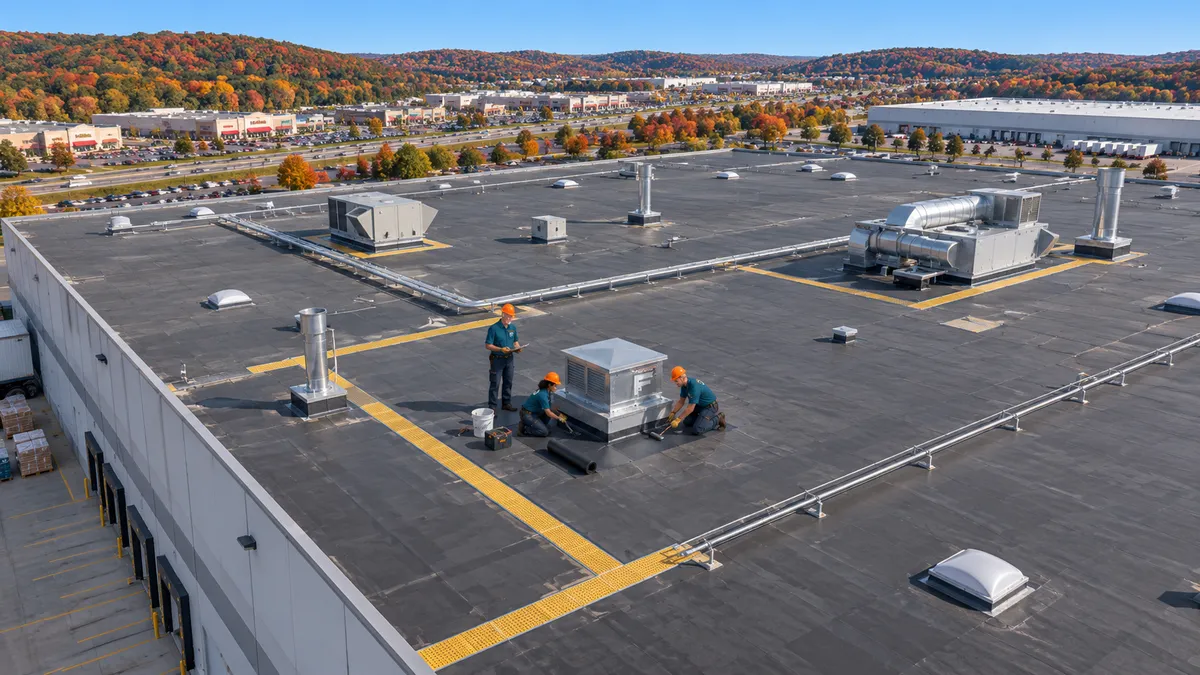
Florence industrial roof repair fits roofs whose trouble sits around equipment, paths, and openings, while the field around them stays dry.
Equipment, discharge, and foot traffic wear plant roofs in the same places on almost every building.
Fans that push out oils leave spongy, stained membrane around their base, and grease softens TPO and EPDM faster than sun alone.
Vibration from compressors and fans loosens fasteners in curb flashing and opens sealant joints at the corners of each curb.
Curb flashing pulls away at the corners, frame seals dry out, and warped hatch lids leak around their gaskets.
Paths to units, fans, and ladders show scuffs, punctures, and crushed cover board that holds water in soft dips.
Condensate and process drips run across the membrane toward drains, wearing a visible path into the surface.
Each option targets the equipment or path that caused the wear, so the same spot stops failing.
Softened membrane around a fan gets cut out and replaced with a resistant patch, with containment or pads where the discharge lands on the roof.
Loose base flashing at process curbs gets refastened or replaced, and sealant joints opened by vibration get cleaned and resealed.
Curbs get reflashed into the membrane or panels, frame joints resealed, and cracked lenses replaced with units that fit the frame.
Crushed board along service paths gets cut out and replaced, the membrane patched, and pads welded or adhered along the walking path.
Plant roof repairs protect the production floor as much as the roof itself.
Leaks over sensitive processes, clean rooms, and electrical rooms get first priority, and the repair is staged so crews have a plan before standing over an active line. Small fixes often fit scheduled shutdowns or weekend hours.
Containment and pads under discharge points keep the same membrane from softening again next season.
Every repair goes on a roof map with location, date, cause, and materials, which plant engineers keep with equipment records.
Walkway pads mark where maintenance crews should walk, and skylight guards stay in place during the work.
Cover the equipment, move what you can, and note when the drip started. Then call us so the repair can be planned around your shifts.
(859) 205-4037Plant roof repairs start with a work plan, so the crew and the production floor stay out of each other’s way.
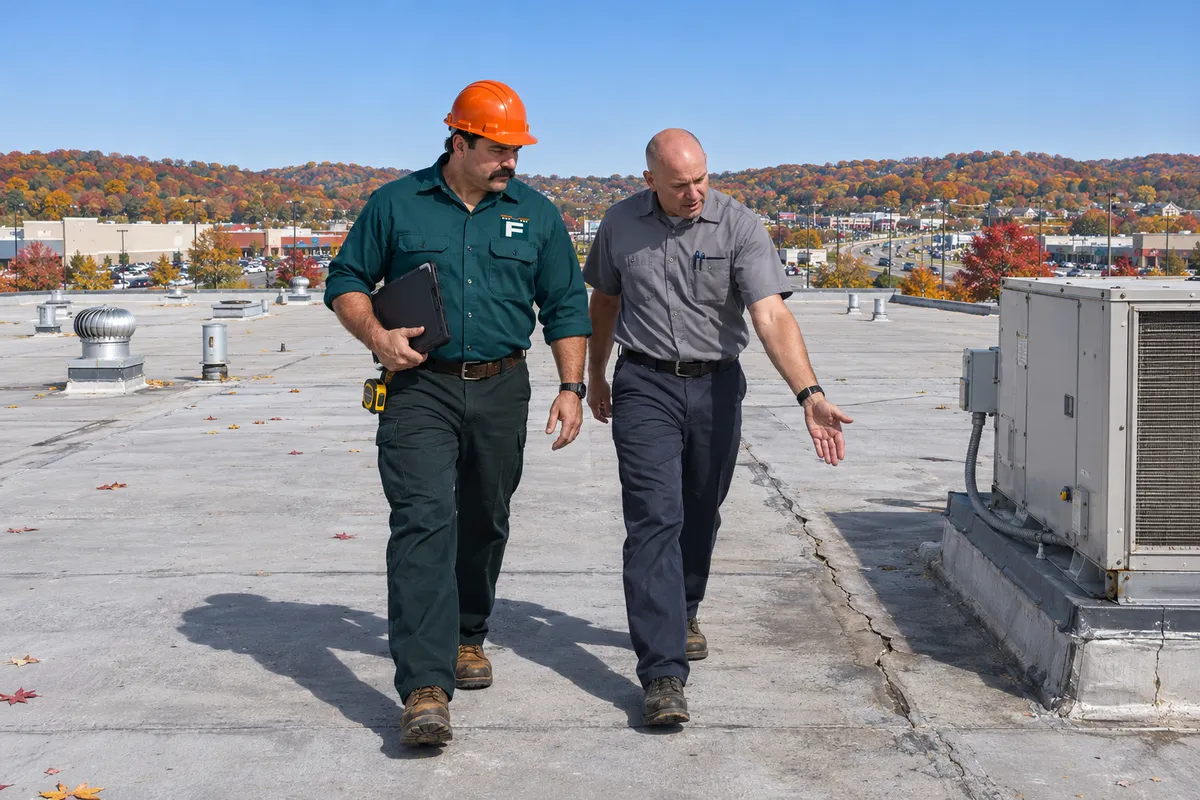
Leak points over the floor get marked with plant staff, then the crew walks the fans, curbs, skylights, and paths above them.
Work zones, hot work permits, unit lockouts, and lift times get set with plant management before materials go up.
Areas over sensitive processes, clean rooms, and electrical rooms get fixed first, then curbs, fans, and paths.
Location, date, cause, and materials go on the roof map so repeat failures stand out on the next visit.
Plants often mix membrane, metal, and hard-to-find leaks on one property.
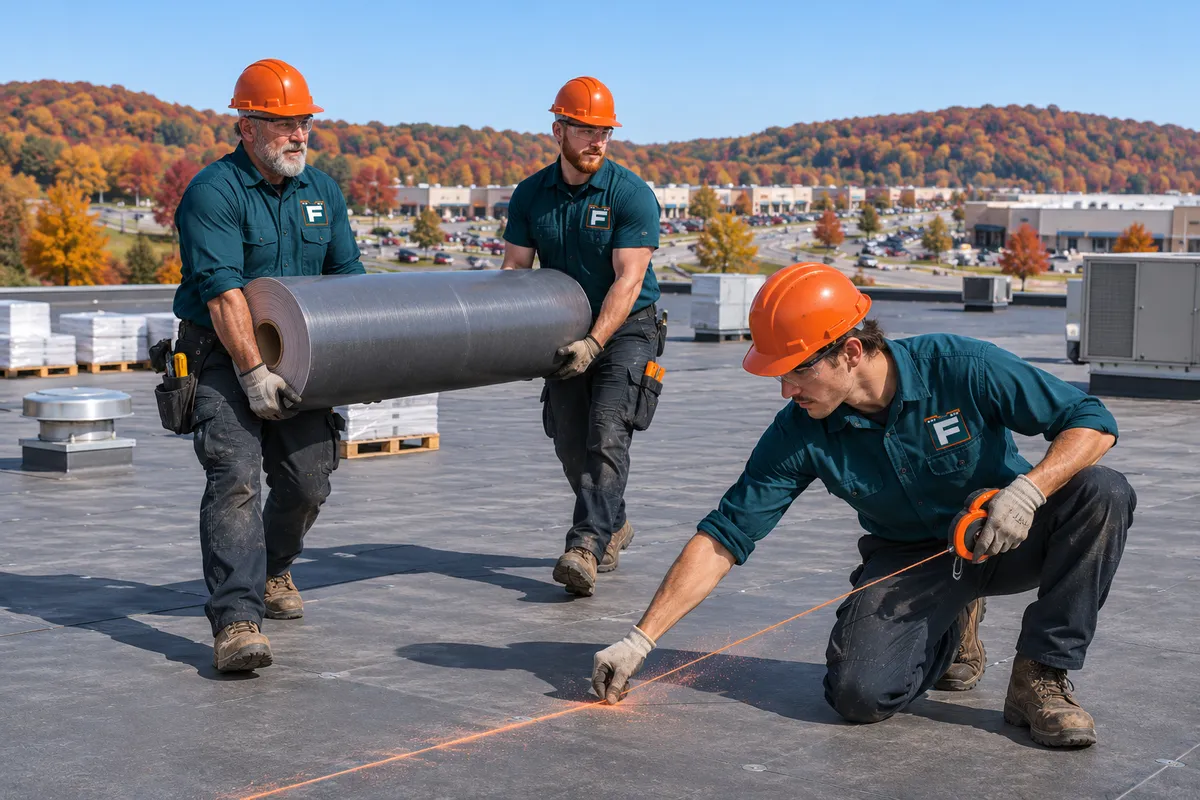
Office wings and dock canopies often have low-slope membrane roofs with their own seams and drains.
Flat roof repair for plant offices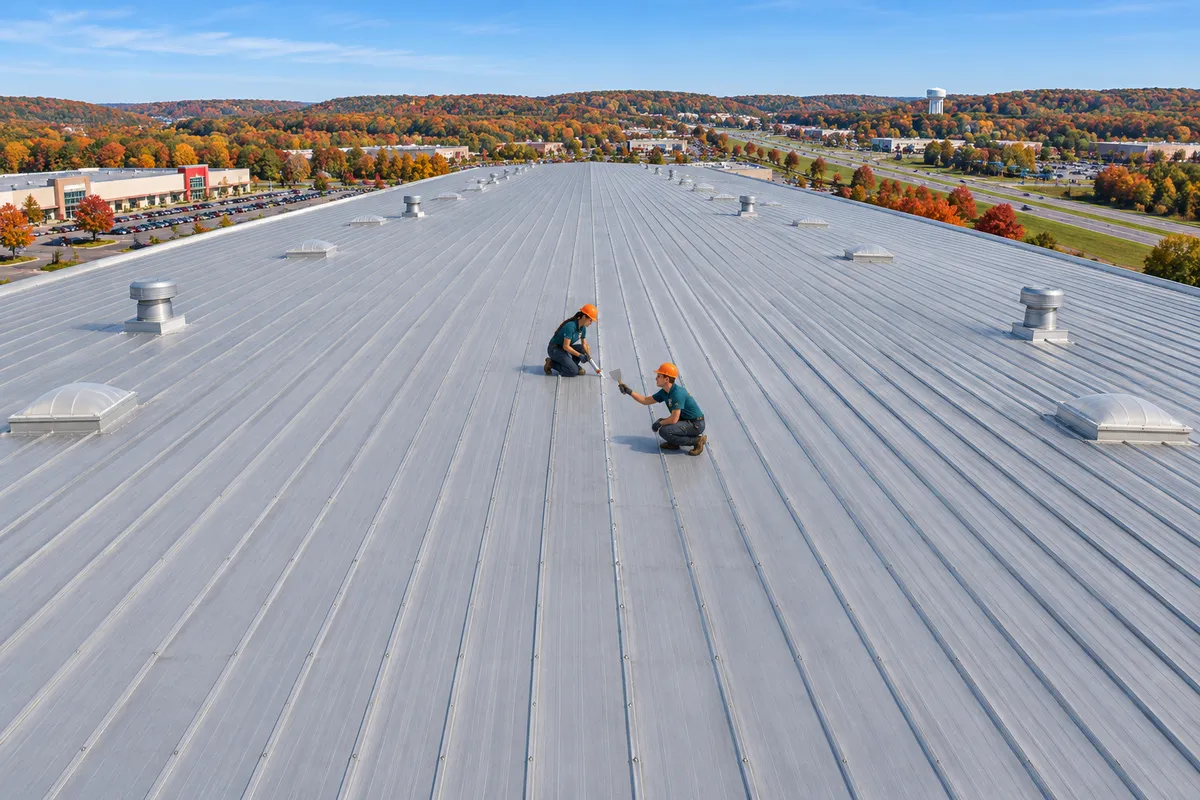
Metal warehouse and storage buildings beside the plant need their screw rows and laps checked.
Metal building repair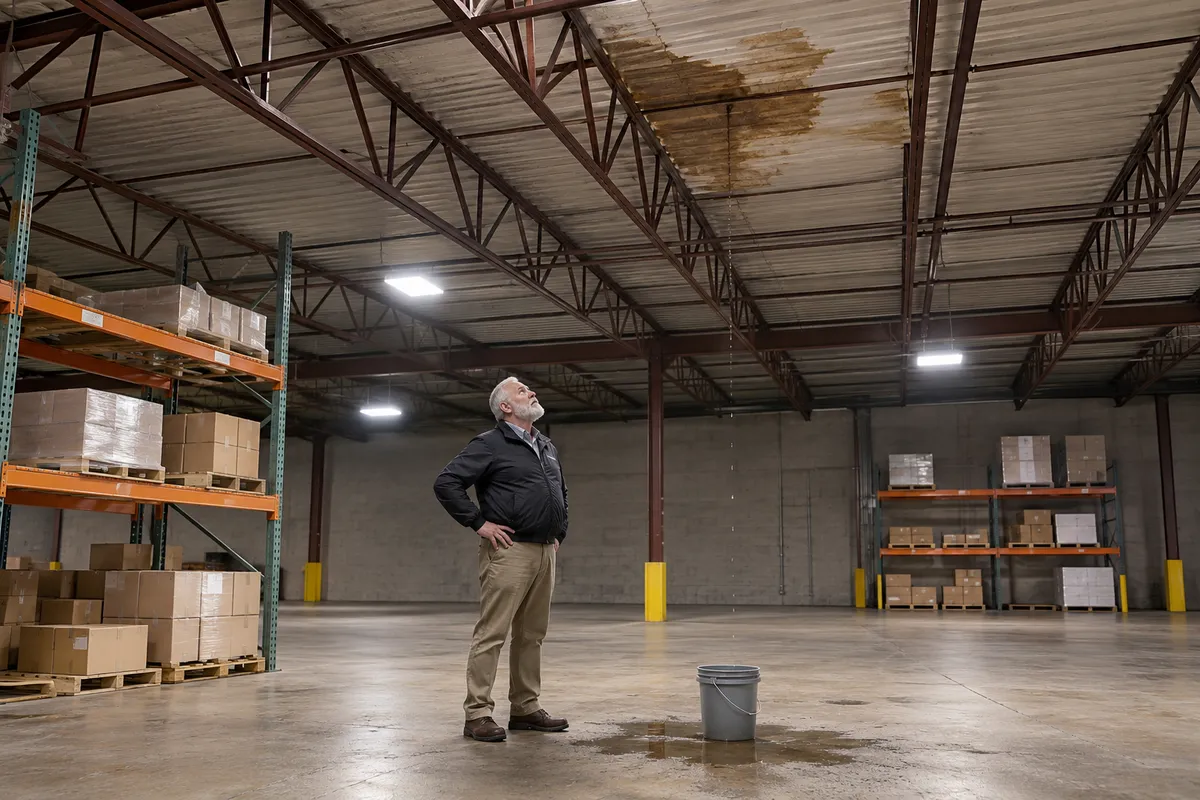
Drips that land far from any fan or curb get a full trace along the deck flutes.
Leak tracing over production floors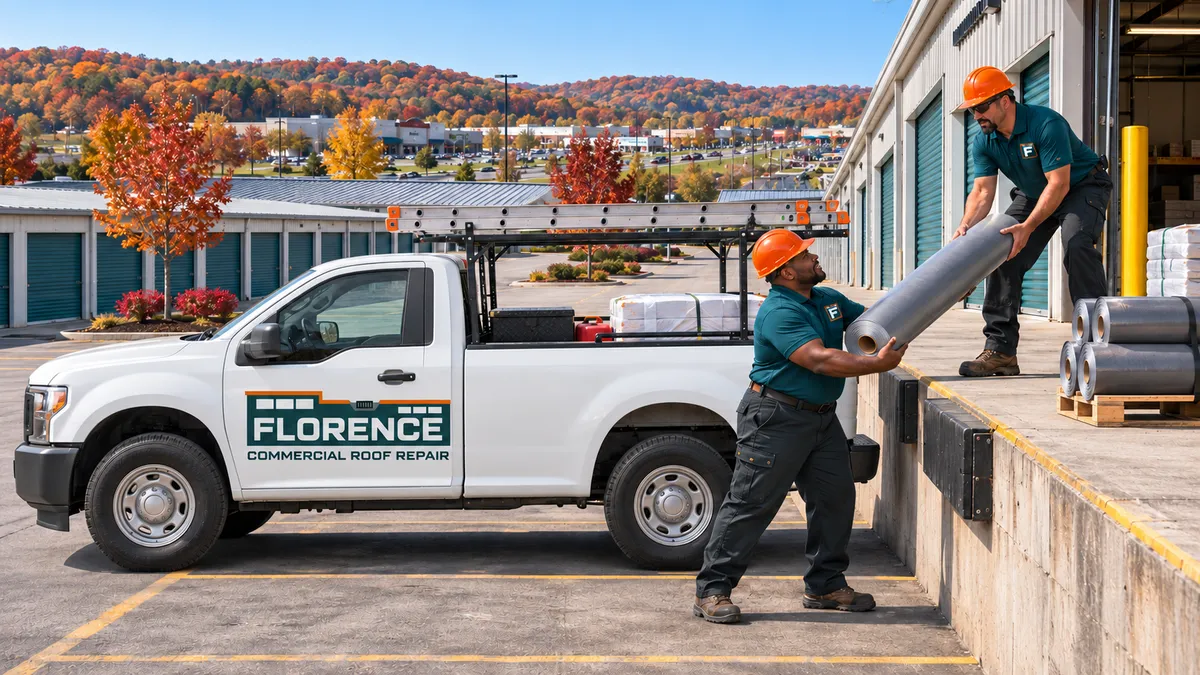
Question about your own roof?
Call UsAnswers for plant managers and engineers.
Plant management and the repair crew set work zones around shifts, production runs, and safety rules before anyone goes up. Leaks over sensitive processes or electrical rooms come first. Planning covers hot work permits near flammable dust, lockouts at fans and units, access routes away from production traffic, and lifts timed outside dock rush hours.
Fans that discharge oils soften and stain TPO and EPDM around their base, and heat or chemicals crack nearby flashing. Vibration loosens curb fasteners and opens sealant joints, and process drips wear a path toward the drains. Repair swaps damaged membrane for a resistant patch, rebuilds curb flashing, and adds containment or pads where discharge lands.
Most leaks come from curb flashing that pulled away at the corners, so the curb gets checked first and reflashed into the membrane or panels. Frame joints get resealed and cracked lenses replaced with units that fit. Smoke vent hatches get checked to open and seal, since a warped lid leaks at its gasket. Fall guards stay in place throughout.
Scuffs, small punctures, and crushed insulation show up along paths to units, fans, and ladders. Crushed cover board leaves soft dips that hold water and tear sooner. Repair cuts out the damaged area down to firm insulation, replaces the boards, and patches the membrane, then walkway pads go down to mark where crews should walk.
A roof map with every repair, leak, and inspection marked shows patterns a single visit misses. Each entry notes location, date, cause, and materials. After a few years it shows which curbs, drains, or seam lines keep failing, which points to a fix at the source and feeds the restoration or replacement decision.
Plants and warehouses in Florence, Hebron, Burlington, and the rest of Boone County get the same planning and repair steps. Freight buildings near CVG add lift height questions close to the runways, and river-town plants in Gallatin County add state permit checks. Every town we cover is listed under service areas.
Tell us what runs under the leak and when the plant can spare a work zone, and we will plan the repair around it.
Want a call back about your roof?
Leave a name and number, or call (859) 205-4037 now.