Seam And Lap Closure
Open seams on membrane roofs get welded or taped, and open laps on metal roofs get cleaned, sealed with butyl, and stitched with new screws.

As a Florence commercial roof leak repair contractor, we trace each drip from the ceiling stain to the seam, curb, or fastener letting water in, then fix that spot.
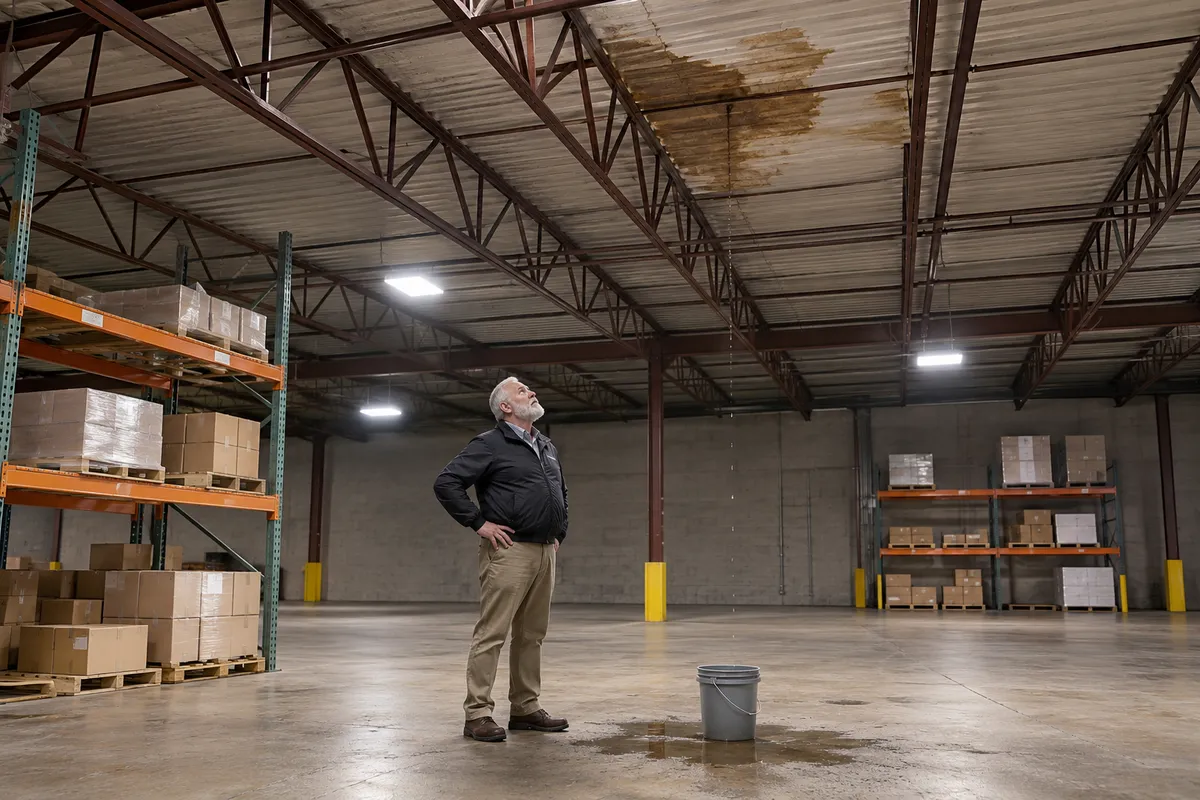
Florence commercial roof leak repair starts by sorting a single entry point from a roof that is failing in many places, and these rows show the difference.
Leaks begin at joints and openings on every roof type, and these zones are where most traces end.
Unwelded sections of TPO and PVC seams, flashing at inside corners, and punctures beside rooftop units let water into membrane roofs.
Old splice adhesive on EPDM, shrinking flashing at parapets, and open laps or cracked wall flashing on built-up roofs are where these systems leak.
Cracked screw washers, rusted end laps, and missing ridge cap closures let rain past the panels on steel buildings.
Seam ends at the eave, pipes cut through panels, and ridge transitions are the weak points on concealed-clip metal roofs.
Rooftop units, skylights, and drains sit on every roof type and take up little area, yet they cause a large share of the leaks crews find.
The fix depends on what the trace finds, so each option ties to a specific roof detail.
Open seams on membrane roofs get welded or taped, and open laps on metal roofs get cleaned, sealed with butyl, and stitched with new screws.
Pitch pans get refilled or swapped for pre-formed boots, cracked pipe boots get replaced, and rooftop unit curbs get new base flashing at the corners.
Wind-driven leaks at parapets get fresh counterflashing sealant, reset coping joints, and base flashing tied back into the membrane.
Clamping rings get reset, scupper corners reflashed, and clogged downspouts cleared so water stops backing up under the edge metal.
Fixing the true entry point is what keeps a leak from coming back after the next storm.
A trace that ends at the real entry point puts the repair on the right seam, curb, or fastener. Patching only above the stain often misses, because water runs along deck flutes and purlins before it drips.
Stopping the entry lets damp boards near it dry, and soaked boards get replaced before they spread water further.
Closing the leak protects inventory, electronics, and ceiling tiles in the bays below the roof.
A dated record of each leak and its source helps sort a one-time failure from a roof that needs bigger work.
A leak that returns after patches means the entry point was missed. Call and tell us when the drip starts and which way the storm came from.
(859) 205-4037Tracing runs from the inside out, then the repair goes exactly where the trace ends.
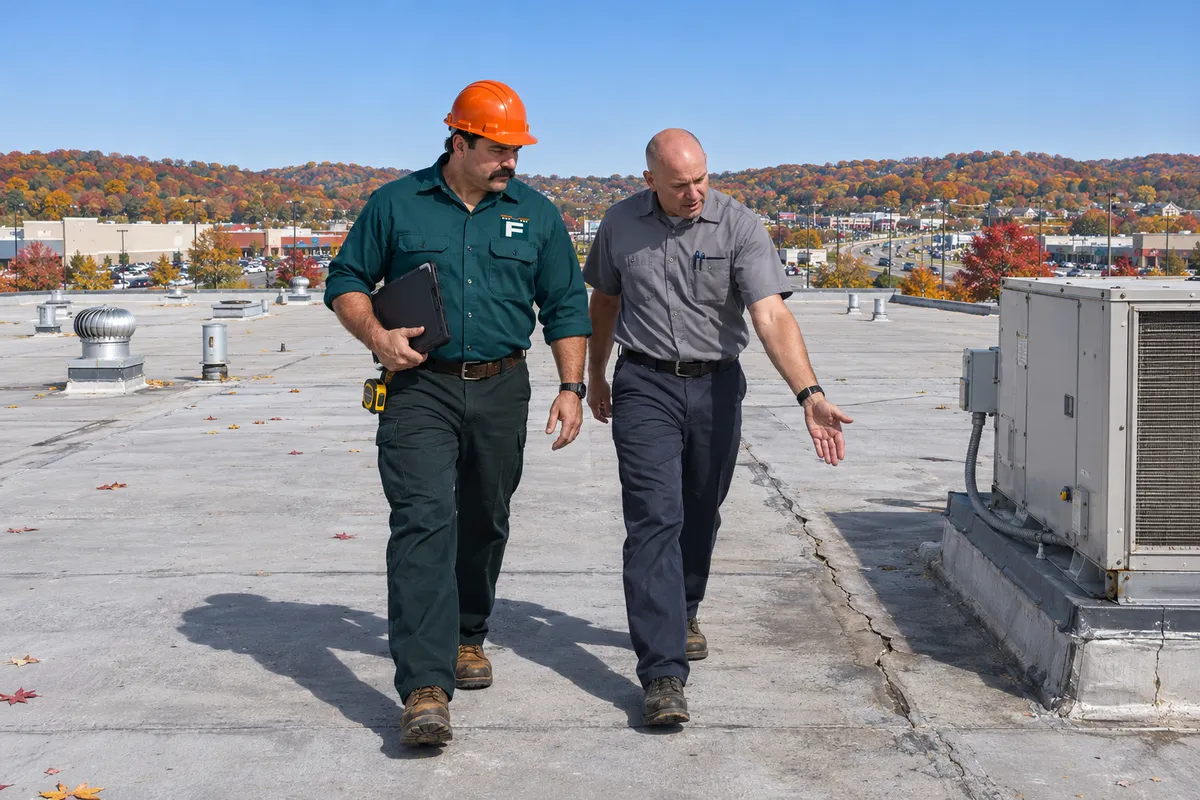
Every drip and stain gets marked inside, then the crew checks the roof directly above and uphill of each mark for open seams and flashing.
Water runs along deck flutes, insulation joints, and purlins, so the trace follows that path upslope from the drip.
A hose runs on one seam, curb, or boot at a time while someone watches inside, until the drip shows up again.
The failed seam, curb, or boot gets repaired with matching materials, then hose-tested again so the drip is confirmed gone.
A trace often ends at a detail that belongs to one of these repair services.
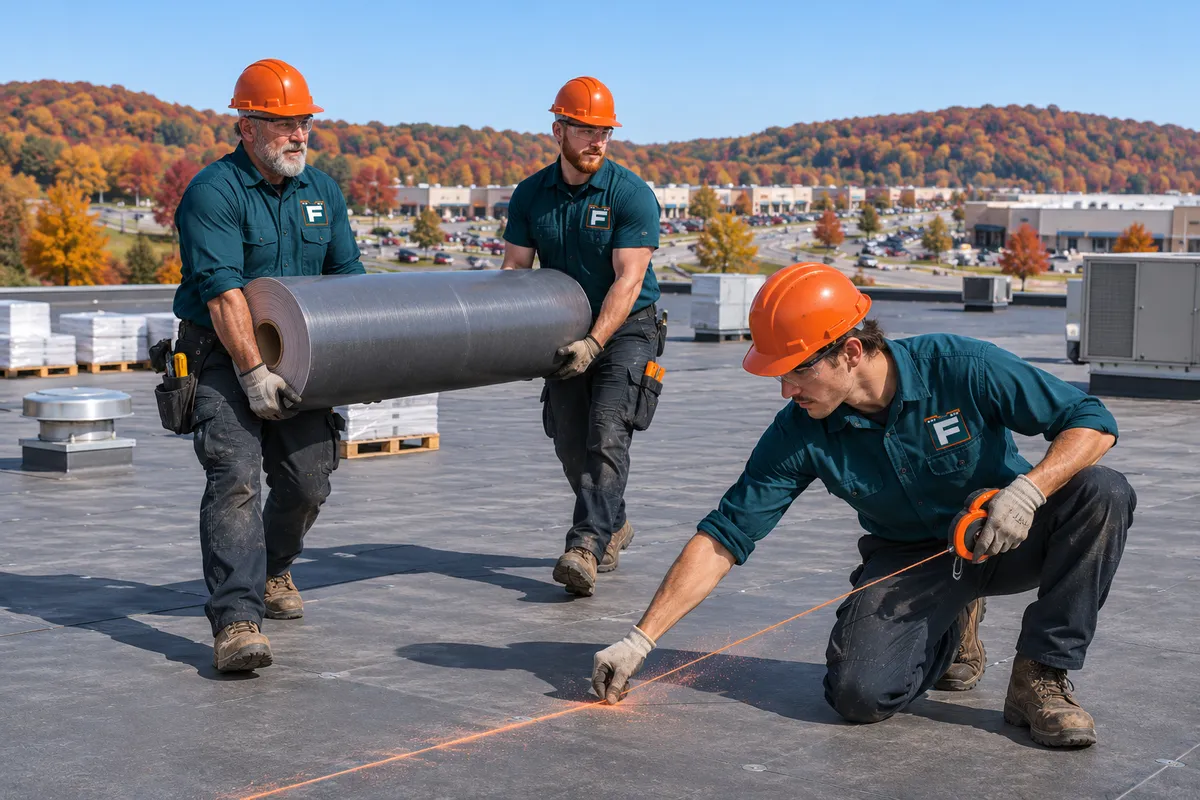
Traces that end at an open TPO weld or a drain flange lead to seam and drain repair on the membrane.
Flat roof repair after a trace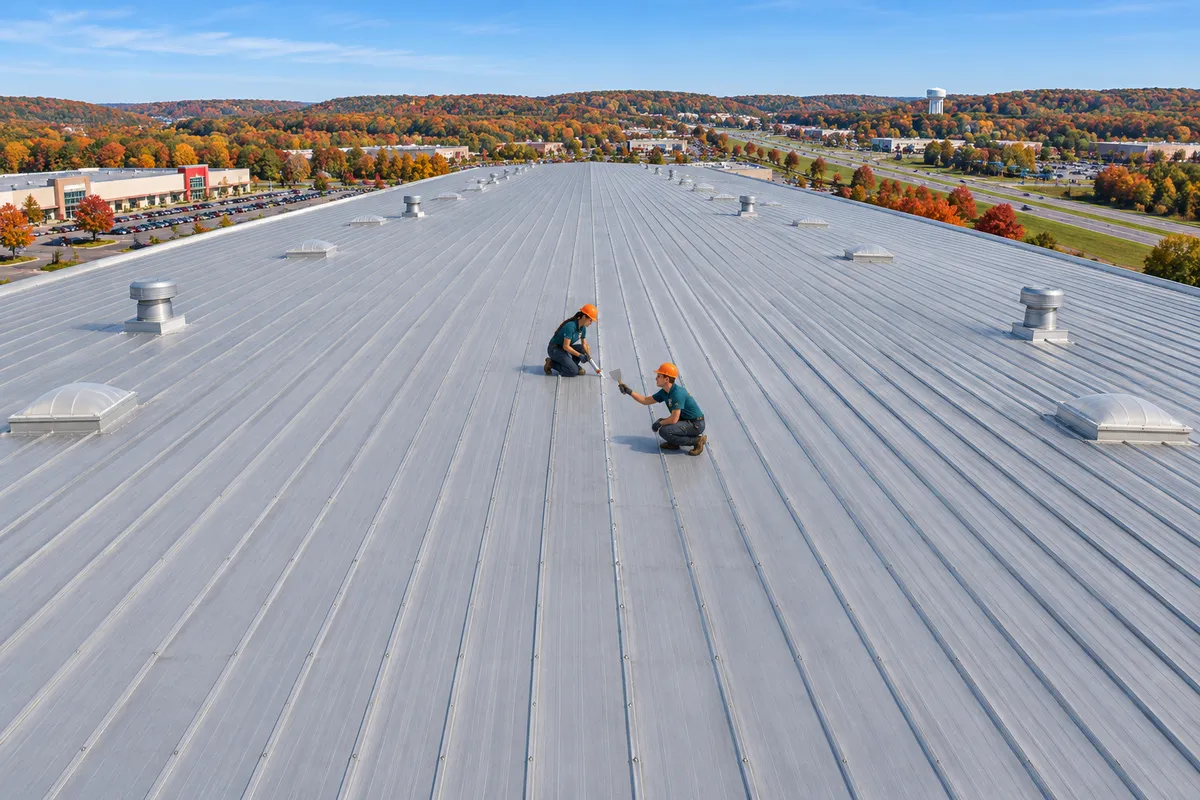
Drips under a steel roof often end at a cracked washer or a rusted lap two purlins upslope.
Metal roof lap and screw repair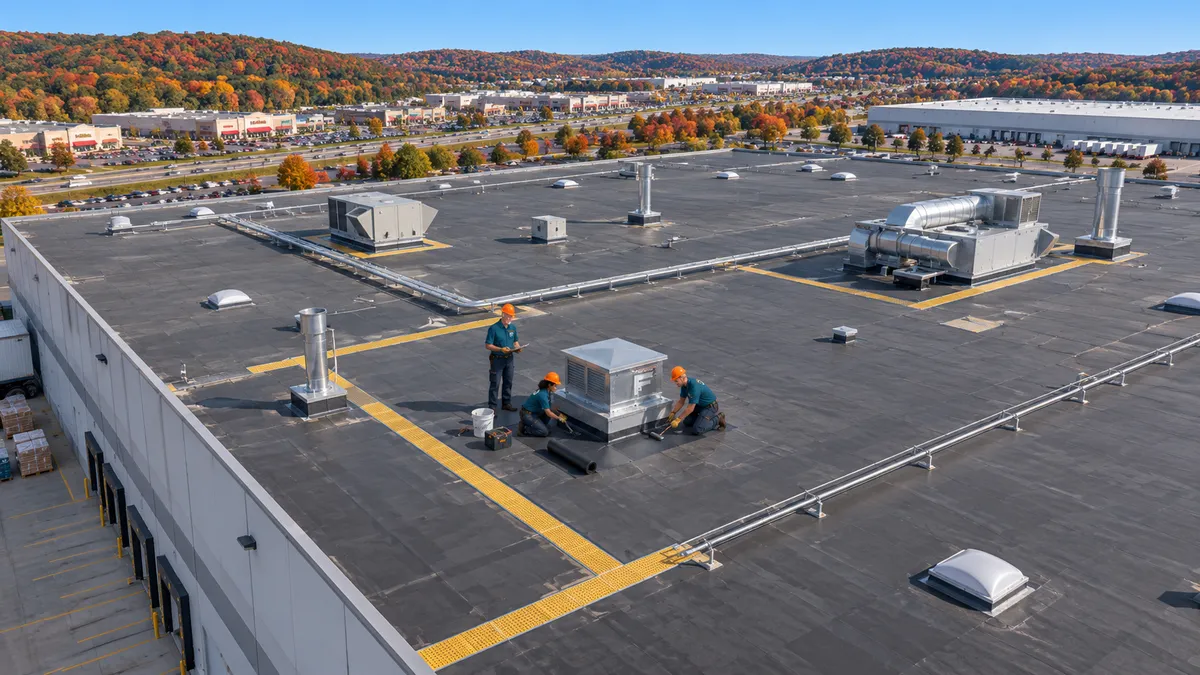
Leaks over production lines get traced and repaired around shifts, lockouts, and hot work rules.
Repairs over plant floors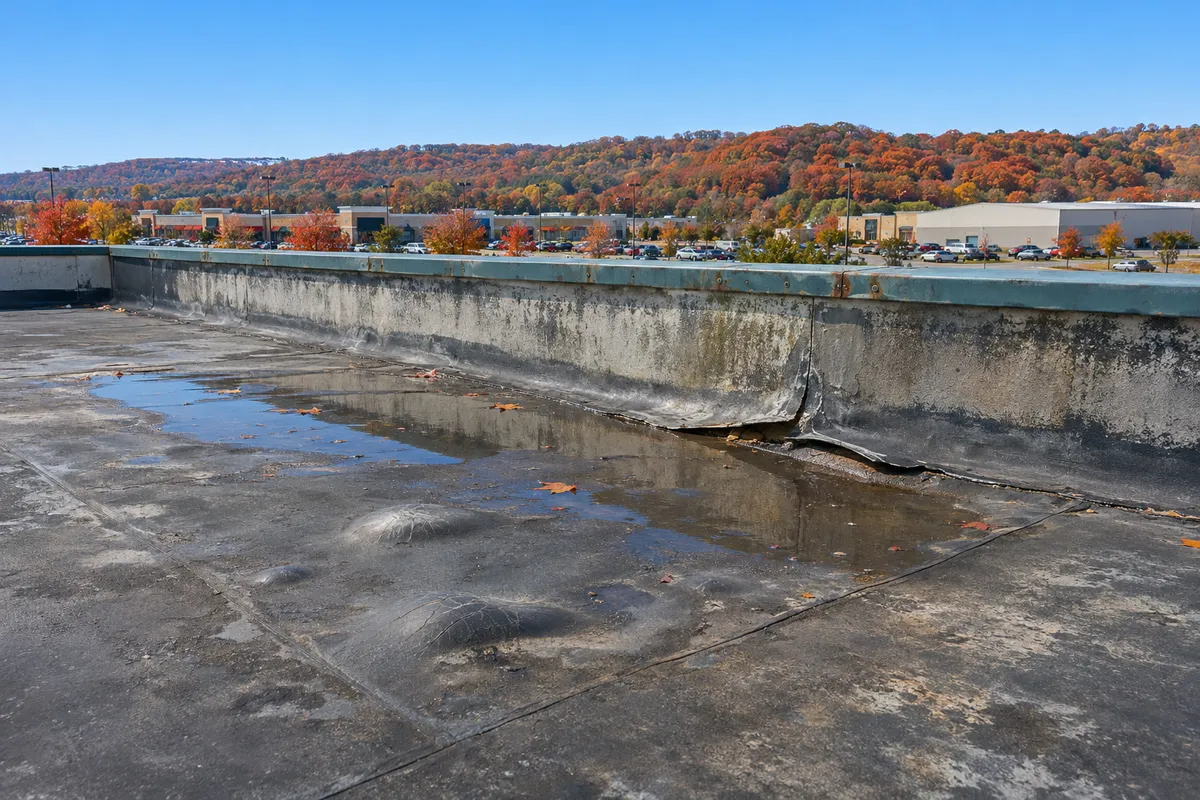
Question about your own roof?
Call UsWhat to expect when a leak gets traced.
Detection starts inside, where every drip and stain gets marked, then moves to the roof above and uphill of each mark. Seams, flashing, curbs, and penetrations nearest each spot get checked first. When the source still hides, a hose runs on one detail at a time, and moisture meters or infrared scans show where wet insulation spreads.
Joints and openings are the weak spots on every system. TPO and PVC leak at unwelded seam sections and corner flashing, EPDM at old splice adhesive and pipe boots, built-up roofs at blisters and laps, exposed-fastener metal at washers and end laps, and standing seam at seam ends and ridge transitions. Units, skylights, and drains leak on all of them.
Water travels before it drips. On steel decks it runs inside the flutes until it finds a seam or fastener, and on metal buildings it runs down purlins and insulation facing. Wet insulation releases water slowly, so a ceiling can drip days after rain. Matching drip timing to wind direction points the crew toward the right wall or curb.
Protect people, stock, and equipment first: move inventory and electronics away from the drip, set buckets and plastic sheeting, and mark stained tiles. Photograph each drip with the time and weather, and check from a safe spot whether drains are backed up. Roof walks wait until the storm clears, and those notes make the trace faster.
Pitch pans shrink away from the pipe inside them, so they get refilled with pourable sealer or replaced with a pre-formed boot. Pipe boots with cracked collars get swapped and their clamps tightened. Rooftop unit curbs get new base flashing at loose corners, condensate lines dripping on the flashing get rerouted, and the upslope side gets checked for damming.
Often, yes. HVAC, electrical, and sign crews cut pipes through membranes, move curbs, or set ladders on panels, and a leak starts soon after. Telling the repair crew about recent rooftop work points the trace straight to that area, and the new penetration gets a proper boot or flashing tied into the existing roof.
Send photos of the stain and the dates it leaked, and we will trace it back to the roof.
Want a call back about your roof?
Leave a name and number, or call (859) 205-4037 now.