Seam Welds And Cover Tape
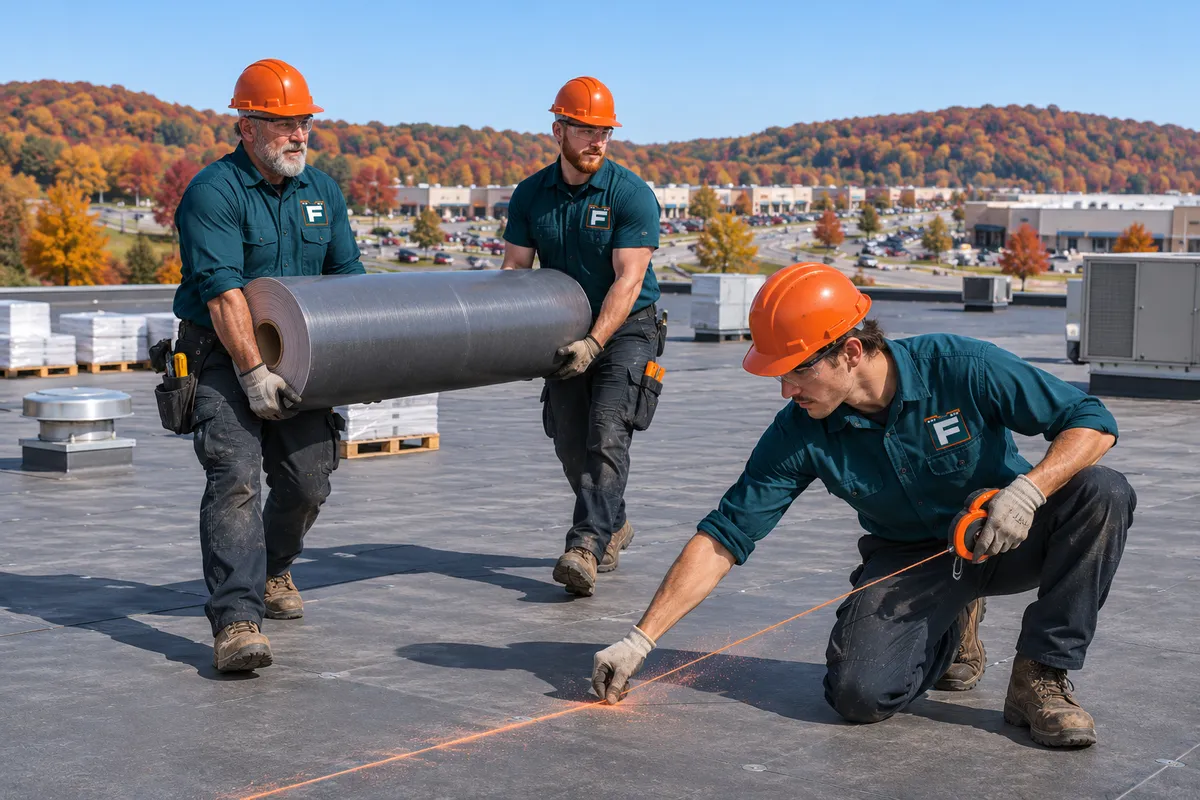
TPO and PVC seams get scrubbed with membrane cleaner and heat-welded after a test weld. EPDM laps get primer and a fresh strip of seam tape centered over the joint, then a probe along its length.

As a Florence flat roof repair contractor, we close split seams on TPO, EPDM, and PVC, patch punctures, and clear the drains that leave water standing.
Florence flat roof repair works when the insulation under the membrane is still dry, so these rows get checked before any patch goes down.
Flat roofs hold water longer than pitched ones, so small gaps in these five zones show up fast as ceiling stains.
Base flashing pulls loose where the membrane turns up the wall, and dried counterflashing sealant lets wind-driven rain behind it during storms from one direction.
Weathered TPO seams split at unwelded sections, and old EPDM splice adhesive lets laps open. Cleaning back to fresh membrane comes before any weld or tape.
A missing clamping ring or membrane pulled off the drain flange lets water run past the bowl and down the outside of the pipe.
Cracked boot collars and the corners of rooftop unit curbs leak under the water that dams on the upslope side of each unit.
Summer heat swells trapped air and moisture into blisters on built-up and modified bitumen roofs. A cracked blister or a soft dip means wet board below it.
Each repair matches the membrane already on the roof, since mismatched products peel away from the sheet.
TPO and PVC seams get scrubbed with membrane cleaner and heat-welded after a test weld. EPDM laps get primer and a fresh strip of seam tape centered over the joint, then a probe along its length.
Punctures and tears get a matching piece of membrane that runs a few inches past the damage on every side, with rounded corners that resist peeling.
Cracked or growing blisters get cut open, dried, adhered back down, and patched over the cut. Small intact blisters get photographed and watched on the next roof walk.
Strainers get cleared, clamping rings reset, and low drain sumps rebuilt with tapered insulation. A small cricket pushes water past a unit curb toward the nearest drain.
Repairs on a flat roof pay off most when they reach the seams and drains before water spreads through the insulation.
A seam or puncture closed early keeps water from wicking through the boards under the membrane. Dry boards are what keep repair a real option for the roof instead of a tear-off down to the deck.
Clearing strainers and lowering a drain sump shortens how long water sits on the membrane after each rain.
Photos of every weld, patch, and drain fix give the next inspection a clear starting point on the roof.
Closing the entry point stops the slow drip that stains tiles and wets stock in the aisles below.
Ponding that lingers for days after rain points to a clogged strainer or a drain set too high. Call and tell us where the water sits.
(859) 205-4037Four steps take a flat roof from the first stain to a closed, tested seam.
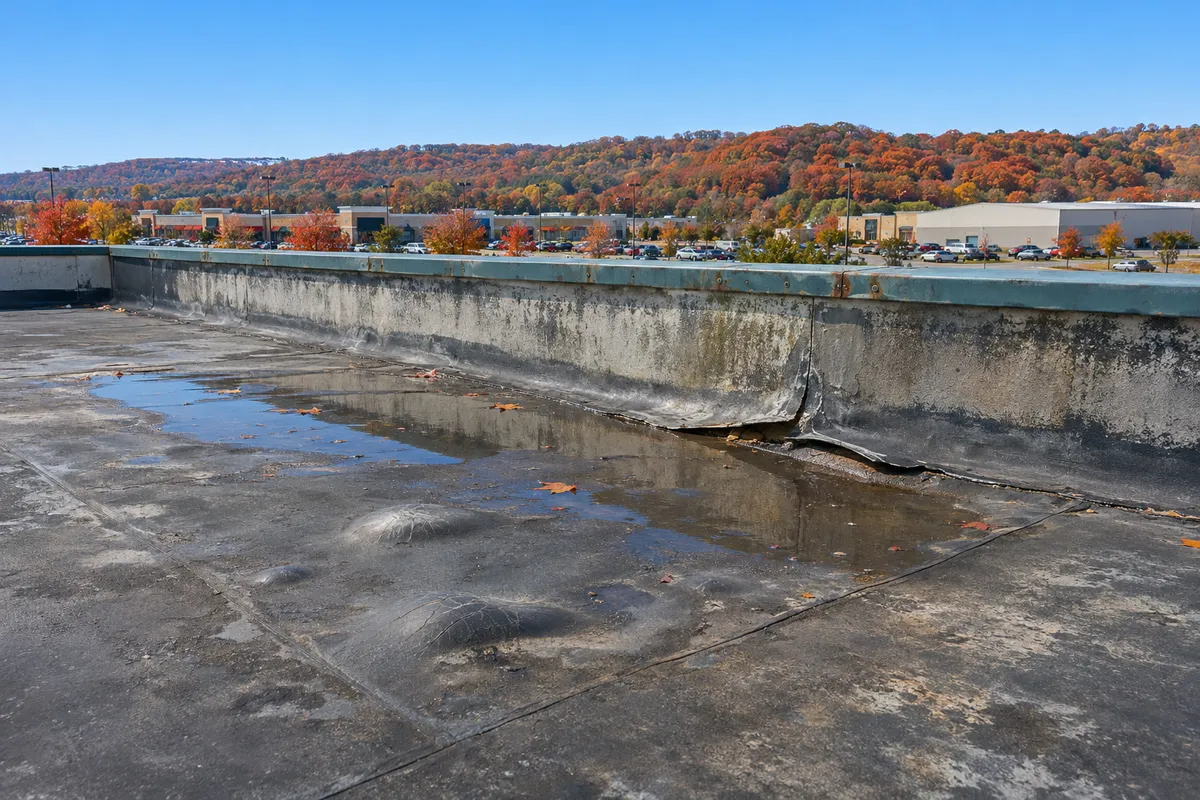
Interior drips get marked first, then the crew walks the membrane above them, pressing around seams, curbs, and drains for soft spots.
Seam probes find open laps, and moisture readings show how far water has spread into the boards around each puncture.
Wet insulation comes out to firm board, new board goes in, and the membrane surface gets cleaned and primed for the repair.
Matching membrane gets welded or taped in place, and each repaired seam is probed again before the crew leaves the roof.
Flat sections often sit beside other roof types or over busy floors, so these repairs come up on the same visit.
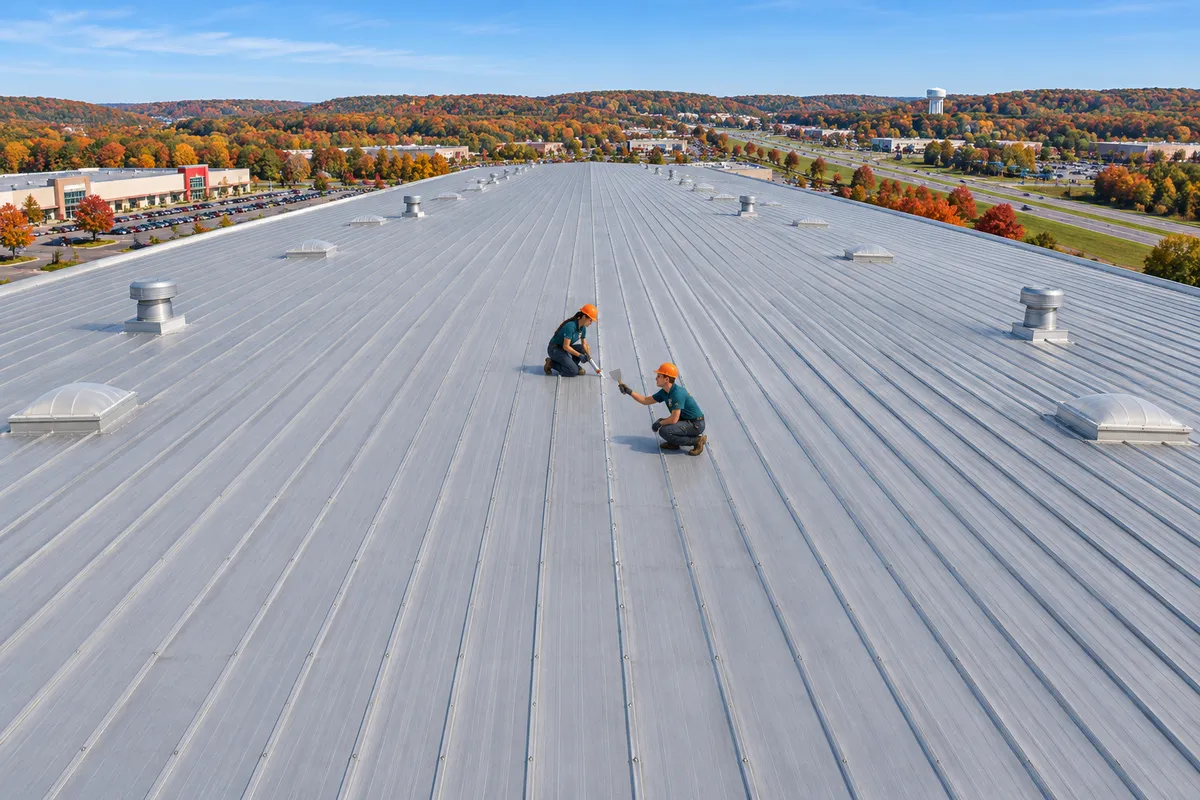
Where a flat roof meets a pitched metal section at a wall, the panels need their own screws and closures checked.
Metal roof fastener repair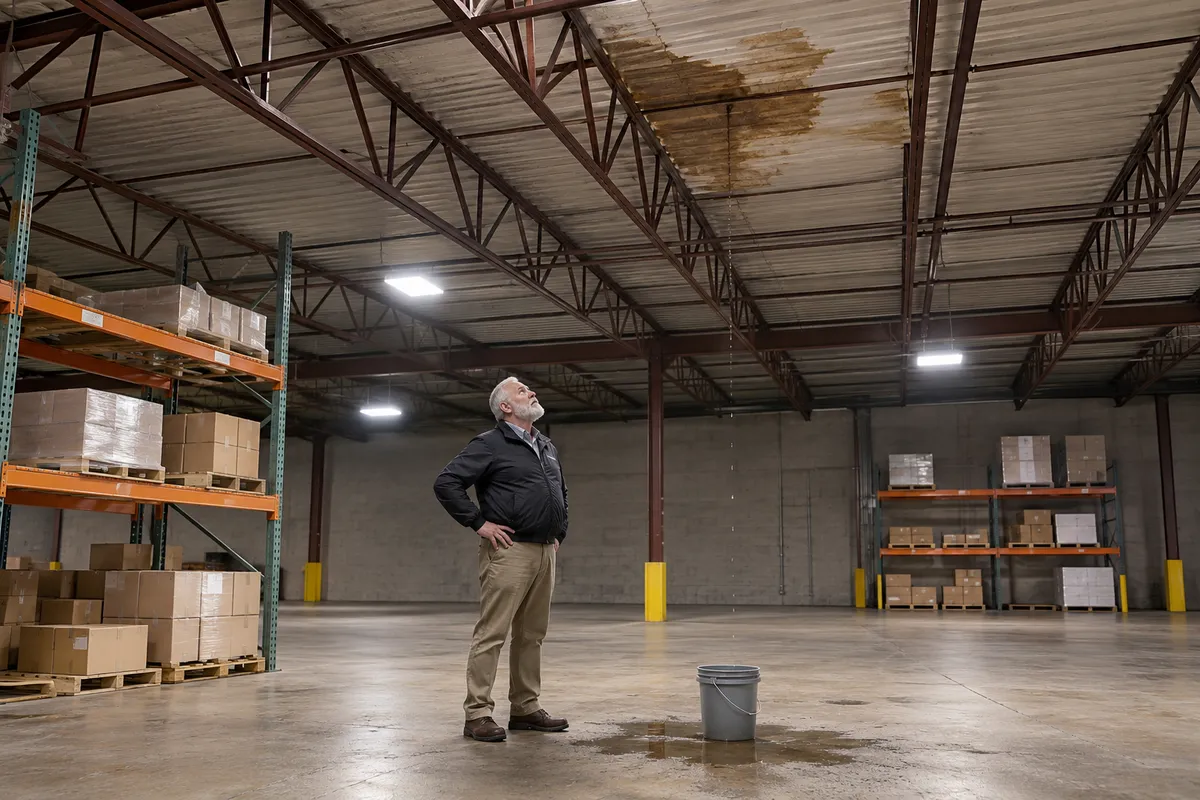
Stains that show up far from any open seam call for a full leak trace along the deck flutes.
Tracing a hidden leak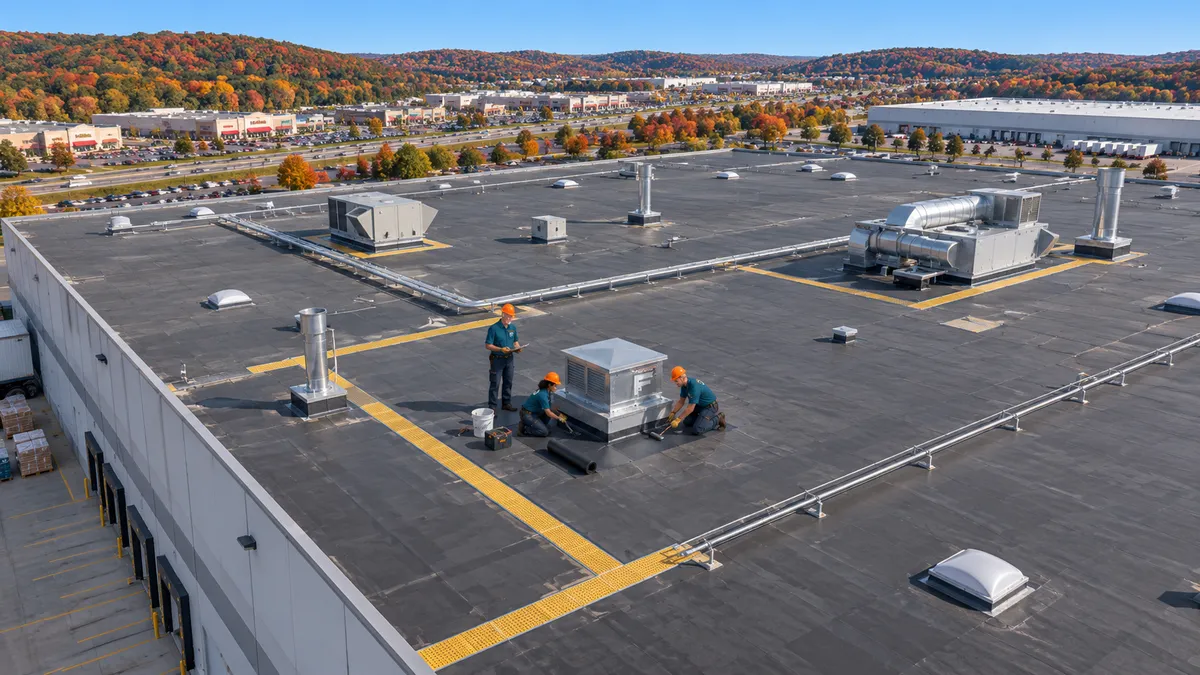
Plant roofs add exhaust fans, process drips, and production schedules to the same membrane repair work.
Plant roof repair planning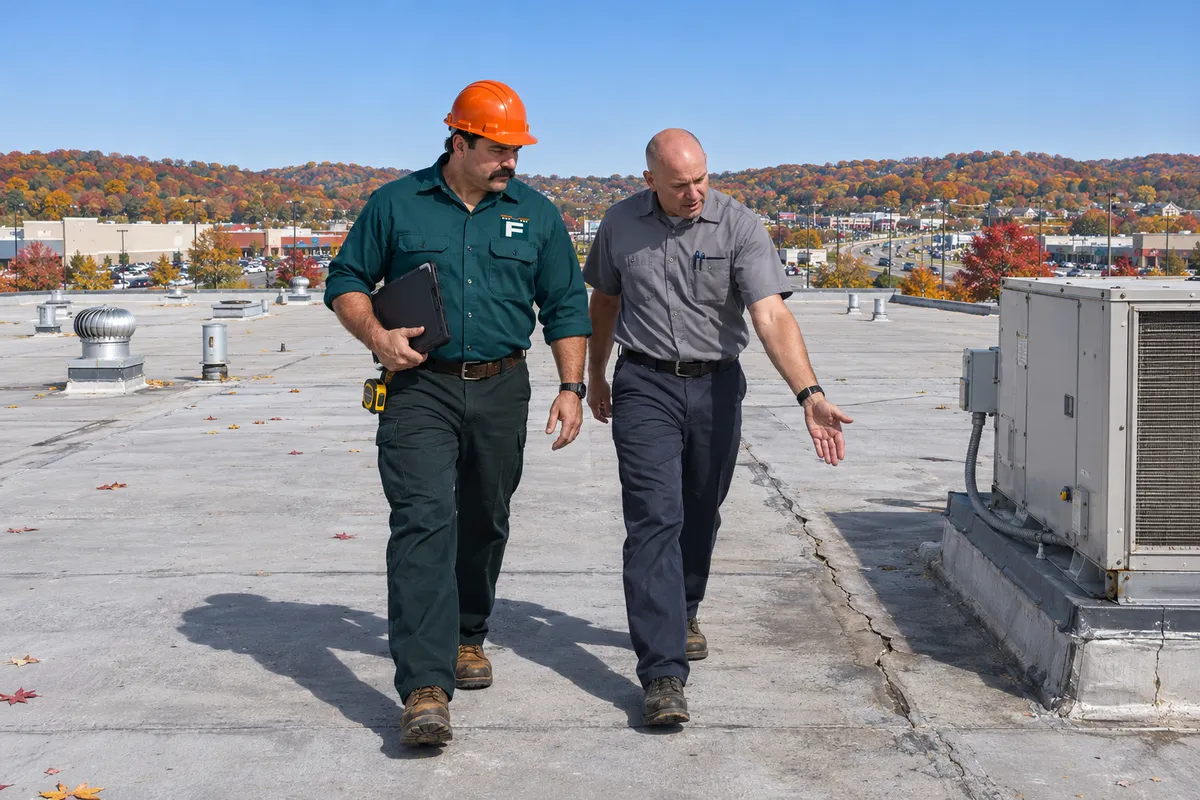
Question about your own roof?
Call UsAnswers on seams, blisters, ponding, and drains.
Split seams get cleaned back to fresh membrane, then heat-welded on TPO and PVC or closed with primer and cover tape on EPDM. Dirt, chalking, and old sealant come off first, since a bond over residue lets go again. When an old TPO seam refuses a test weld, a cover strip goes over the whole seam.
Trapped air or moisture between roof layers expands in summer heat and lifts the surface into a blister, most often on built-up and modified bitumen roofs. Small intact blisters get watched. Once one cracks, grows, or sits in a foot path, it gets cut open, dried, adhered, and patched, with a moisture check around it.
Finding why the water sits there comes first, and the drain itself is the first suspect. Fixes range from clearing leaves out of strainers and scupper boxes to lowering a drain sump with tapered insulation, building a cricket behind a unit curb, or adding a drain at the low spot. Dirt rings show how big the pond gets.
Yes, with a matching piece of membrane that reaches a few inches past the damage and has rounded corners. Before the patch goes on, the crew presses around the hole for soft, wet board and replaces any it finds. Punctures gather near ladders, hatches, and unit paths, so walkway pads often go in with the repair.
Water collects at drains and scuppers, so any gap in the seal there sees constant exposure. At a drain, the usual causes are a loose clamping ring, a cracked bowl, or membrane pulled off the flange. Scuppers leak at the corners where the box passes through the parapet. Repair resets the ring, reflashes the corners, and clears the downspout.
TPO, EPDM, PVC, modified bitumen, and built-up roofs all get repaired with materials that match them. Each sheet bonds its own way: TPO and PVC weld with heat, EPDM takes primer and tape, and asphalt-based roofs take compatible modified bitumen patches. Mixing products causes the peeling that brings owners back.
Send the roof type and where water stands or drips, and we will set up a flat roof inspection.
Want a call back about your roof?
Leave a name and number, or call (859) 205-4037 now.