Fastener Replacement
Loose screws come out and an oversized screw with a new washer goes into the same hole for a tight bite. Screws that missed the purlin get pulled and the hole sealed.

As a Florence commercial metal roof repair contractor, we tighten loose screws, seal rusted end laps, and fix gutters, ridge caps, and flashing on steel buildings.
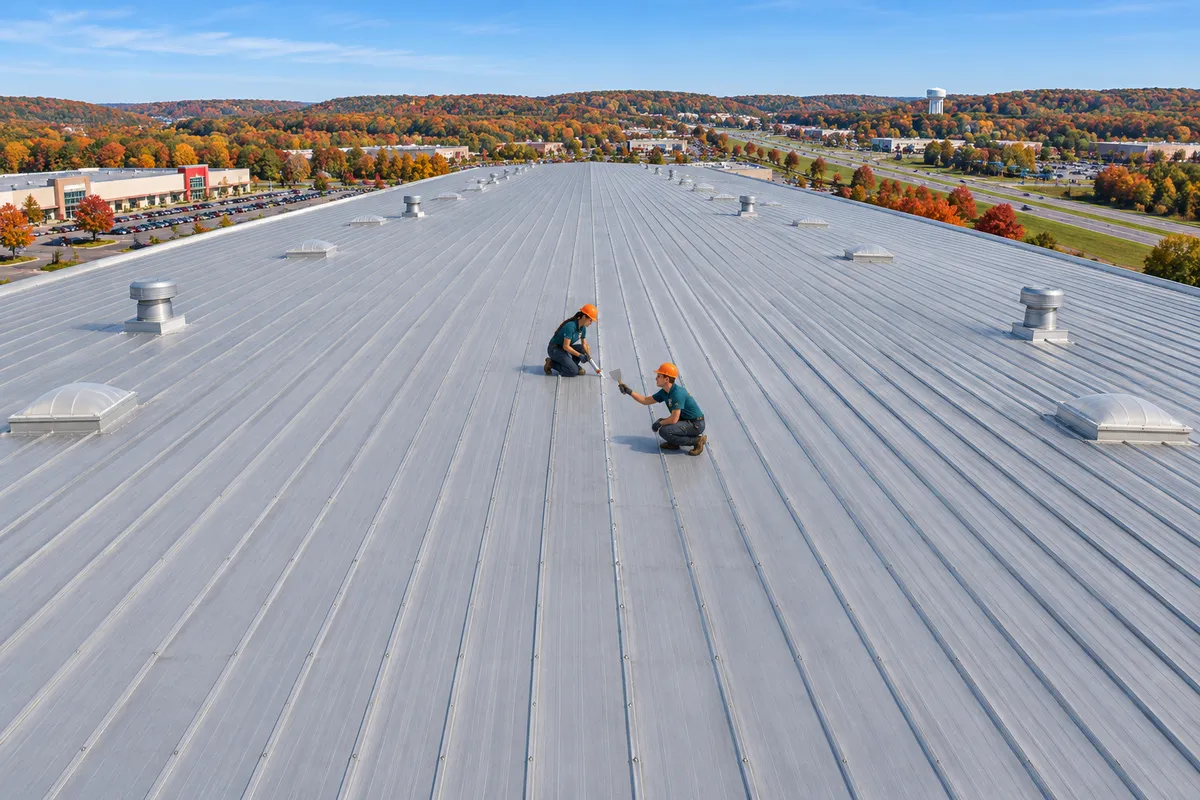
Florence commercial metal roof repair fits a steel roof whose panels and purlins are still solid, and these rows show where repair ends.
Metal roofs move every day as the sun heats and cools them, and that movement opens these five spots first.
Panels expand and shrink with temperature, which slowly wallows out screw holes in the purlins. Rubber washers harden and crack in the sun until water slips past the head.
Water wicks between overlapping sheets at end laps and sits there, so rust starts at the lap first. Loose stitch screws let side laps gap open in wind.
Foam closures under the ridge cap crumble or get pulled out by birds, and wind then pushes rain up under the cap on stormy nights.
Gutter seams, end caps, and downspout outlets leak first, and flapping eave trim tears its own fastener holes larger with every storm.
Bent metal at headwalls, sidewalls, and unit curbs moves with the panels, so its sealant cracks and closures fall out before the panels fail.
Every fix uses parts that match the existing panels, from screw size to rib profile and finish.
Loose screws come out and an oversized screw with a new washer goes into the same hole for a tight bite. Screws that missed the purlin get pulled and the hole sealed.
Rusted laps get wire-brushed to firm steel, primed, and resealed with butyl tape or lap sealant, with stitch screws added where the side lap has opened.
Holes smaller than a hand get a metal patch set in sealant and fastened at the edges. Larger rust-through near the eave means a new panel matched to the rib.
Crumbled closures get replaced, cap laps resealed, eave trim refastened, and wall flashing reset over the last rib with its laps running downhill.
Metal roof repairs protect the steel itself, which is why a loose screw is worth fixing early.
Sealing laps and swapping dried washers keeps water from sitting on bare steel, where rust spreads along the lap and into the purlin. Panels that stay dry keep their strength, and the repair stays a small job on the roof.
Refastened eave trim and ridge caps stop the flapping that loosens more screws with every windy night.
Resealed gutter seams and cleared downspouts keep water from backing up under the eave panels.
A row-by-row record of replaced screws shows which purlin lines move most, so later checks start there.
Orange streaks running down from an end lap mean water is sitting between the sheets. Call and tell us how many laps show it.
(859) 205-4037Metal roof repairs follow the purlin lines, so the work moves in rows across the roof.
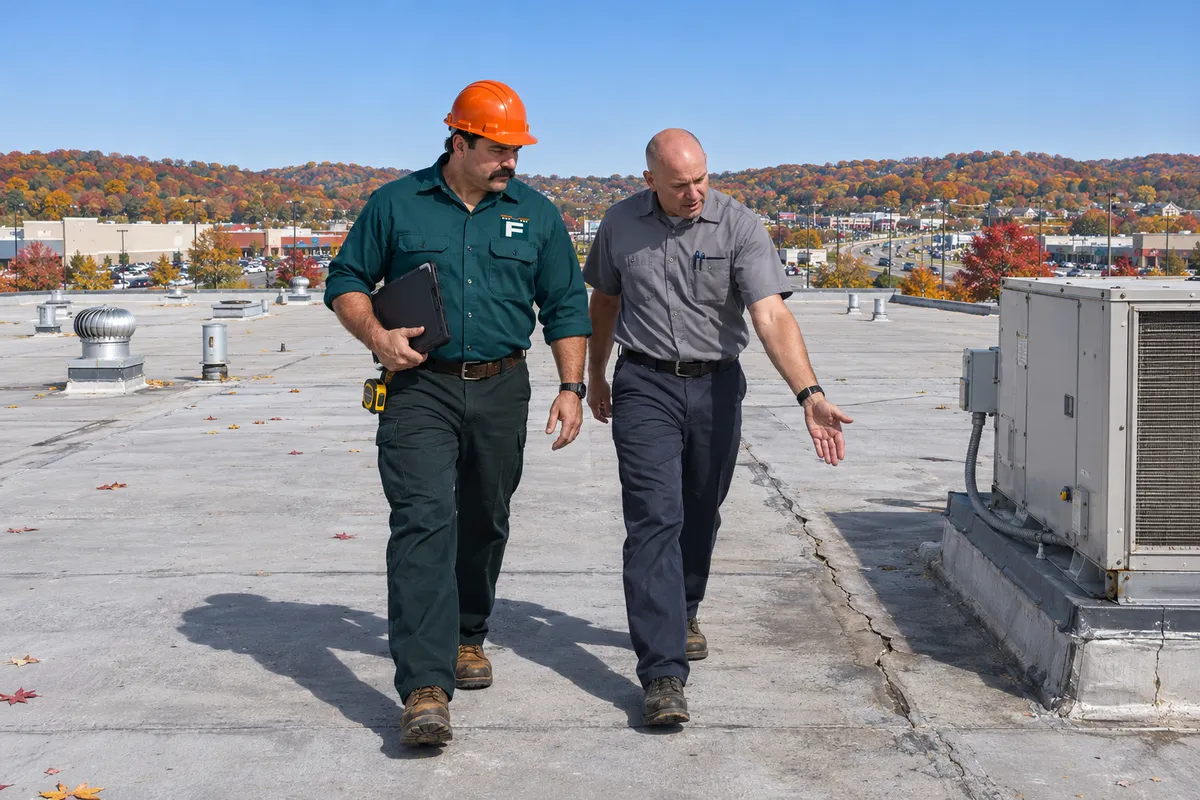
Inside marks get matched to the panel run above, then the crew walks the purlin lines checking screws, laps, ridge, and flashing.
Each loose screw, open lap, and rust spot gets marked on a roof sketch so the repair runs row by row.
Screws get upsized with new washers, laps get cleaned and resealed, and rusted holes get patched or the panel swapped.
Ridge closures, eave trim, and gutter seams get finished last, and the whole run is photographed for your records.
Steel buildings often carry a flat addition, a stubborn stain, or plant equipment on the roof.
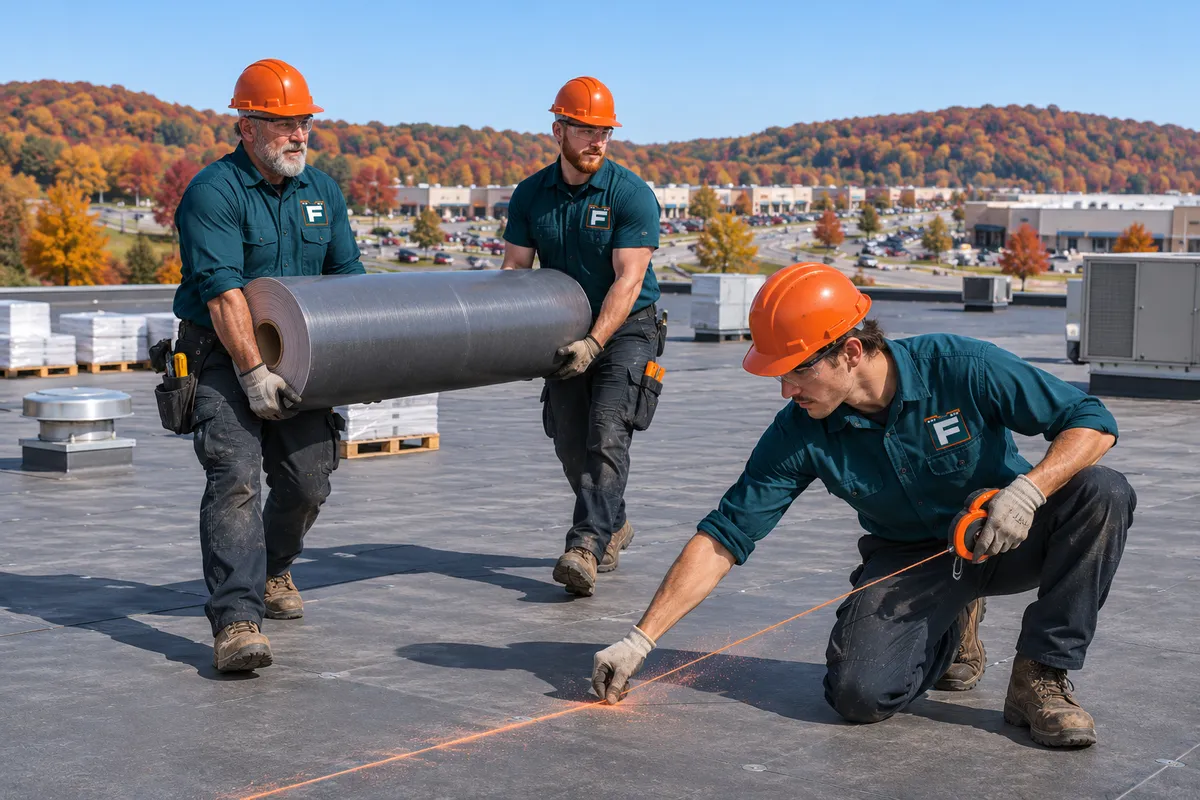
An office wing or addition with a low-slope membrane roof gets its seams and drains checked on the same visit.
Flat roof seam repair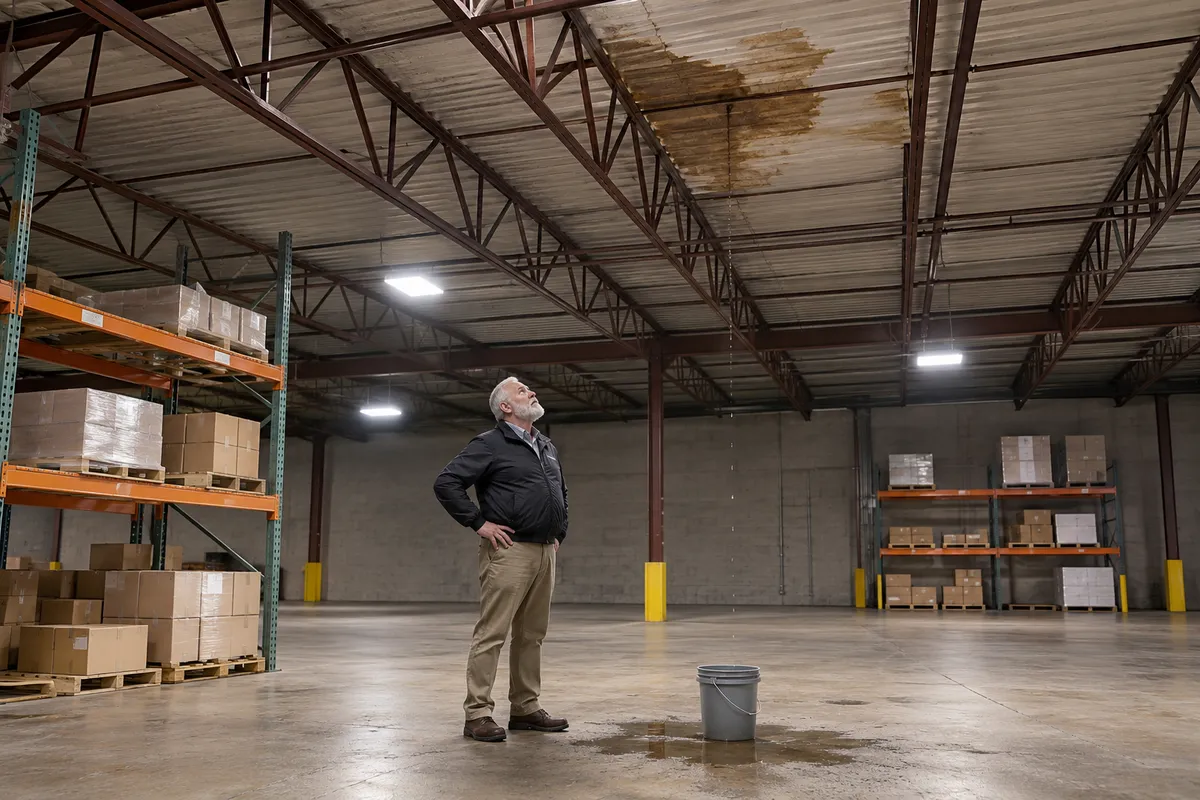
Drips that run down purlins and fall far from the panel above are traced from the inside out.
Leak tracing on steel buildings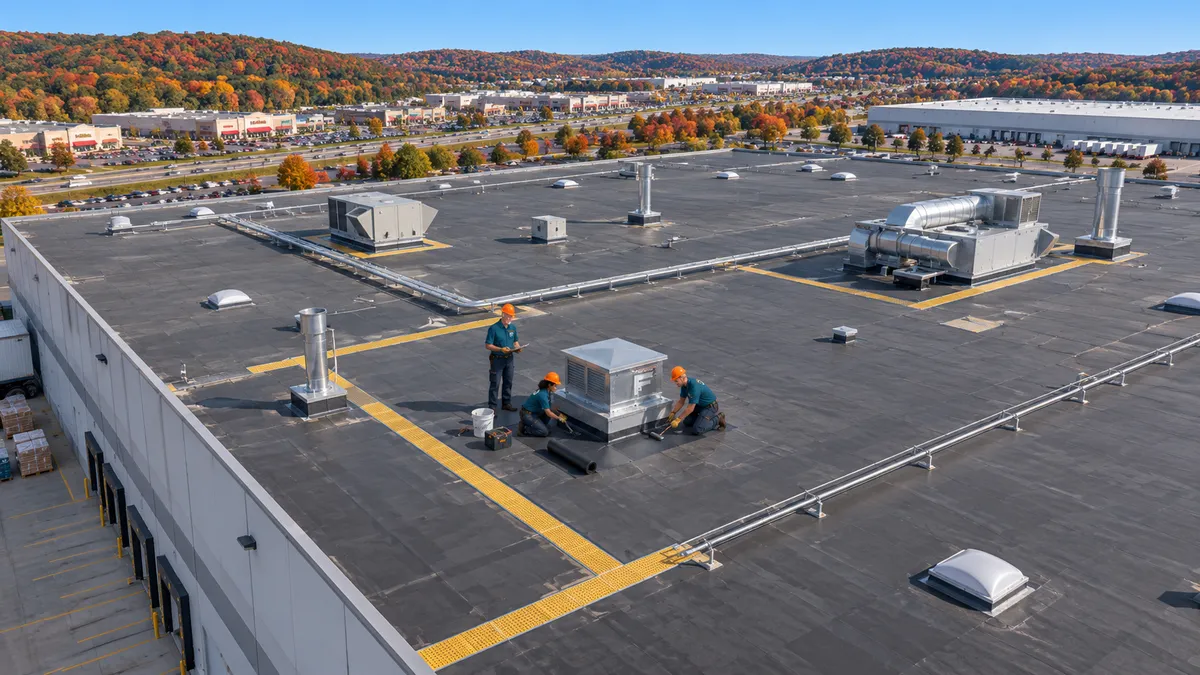
Steel plant roofs with exhaust fans and skylights add hot work rules and lockouts to the repair.
Industrial roof repair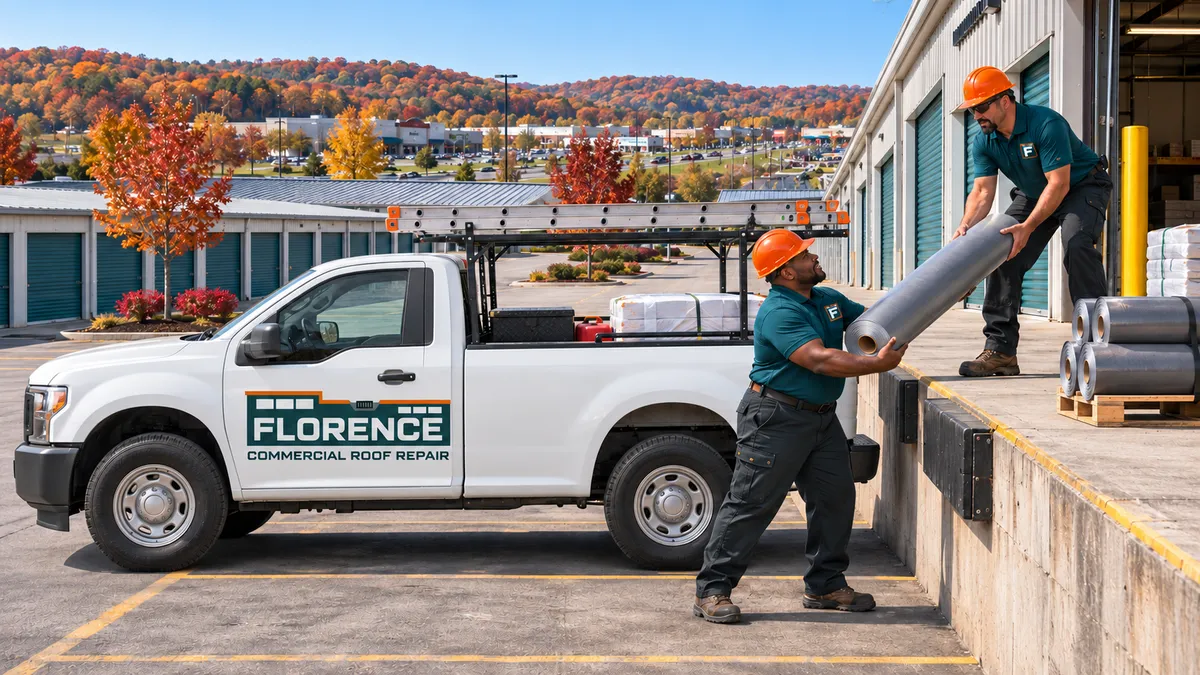
Question about your own roof?
Call UsScrews, laps, trim, and flashing on steel buildings.
Daily expansion and contraction slowly wallows out the hole in the purlin, and sun-hardened washers crack until water gets past the head. The crew checks each row along the purlins, swaps loose screws for oversized ones with new washers, and seals holes where a screw missed the purlin. Stitch screws along side laps get the same check.
End laps rust first because water wicks between the sheets and stays there. Light rust gets wire-brushed and primed before butyl tape or lap sealant goes in. Holes smaller than a hand get a fastened metal patch set in sealant, and larger rust-through near the eave or gutter means cutting out that section or replacing the panel.
Gutters leak at section seams, end caps, and downspout outlets. Ridge caps leak once the foam closures underneath crumble or birds pull them out, letting wind push rain under the cap. Repair replaces the closures, reseals cap laps, swaps screws missing washers, and refastens loose trim before it tears its holes larger.
Flashing where panels meet a wall or unit curb gets refastened or replaced, then sealed with new closures and butyl tape. Headwalls lose closures, sidewalls open along the last rib, and curbs dam water upslope, which a cricket fixes. A leak that keeps returning at one wall points to flashing lapped the wrong way, so that run gets replaced.
Membrane repairs bond new sheet to the old one, while metal repairs center on the fasteners, laps, and sealants that let steel move. An open joint on metal gets resealed with stitch screws, a hole gets a patch or a new panel, and a pipe gets a flexible boot shaped to the ribs. Both need materials the existing roof accepts.
Panels rusted through near the eave, crushed by a ladder, or holed by hail get replaced with new sheets that match the rib profile and finish of the old ones. Matching keeps the laps nesting tight. When rust-through runs across many panels, a full metal re-roof gets priced instead of piecemeal swaps.
Tell us the panel type and where the rust or drips show, and we will walk the purlin lines with you.
Want a call back about your roof?
Leave a name and number, or call (859) 205-4037 now.